
Injustice: Gods Among Us
Warner Bros. International EnterprisesAction
4.3226.52K Reviews
- Version
- 3.5.1
- Installs
- 10.00M
- Age Rating
- Teen
Screenshots

Our Review of Injustice: Gods Among Us
 Analysis by Appyee
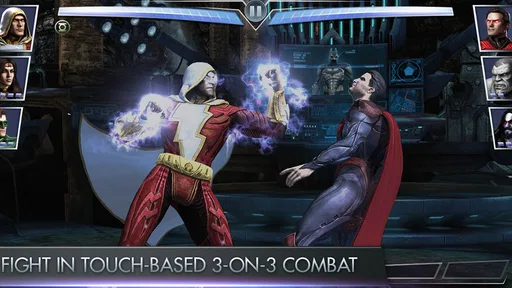
Injustice: Gods Among Us is the kind of mobile fighting game I can pick up for a few minutes and still feel that I have made progress. It brings DC heroes and villains into a touch-focused action format, with battles built around assembling a team rather than controlling one fighter through a long arcade ladder. I have found it most enjoyable when I treat it as a collection-and-strategy game with fighting at its center, not as a replacement for a full console fighting experience.
That distinction matters. The game is free to download, and the core appeal is easy to understand: gather familiar DC characters, improve them, and send them into battles where timing, team selection, and resource management matter. Warner Bros. International Enterprises developed it, and its Teen rating makes it better suited to older children and adults than to very young players. The current version is 3.5.1, and it requires Android 6.0 or later on compatible Android devices.
Its long presence on mobile is also reflected in its large audience: the game has passed 10 million installs and holds a 4.3 average from roughly 2.5 million ratings. Those numbers do not guarantee that every player will enjoy the same pace or progression, but they do suggest that the format has remained approachable for a broad DC audience. My own recommendation is simple: try it if you want a free superhero battler with a collection layer, but go in expecting repetition and optional spending rather than a one-time, complete fighting package.
How the free model affects the experience
I find the free entry point useful because it lets me test whether the touch battles and team-building loop suit my habits before I spend anything. In-app purchases range from small amounts to a much larger single-item cost, so I’d decide on a firm limit early and treat purchases as optional rather than a shortcut I need. That choice also shapes how comfortably the game fits into different budgets and play routines.
Free access is useful, but the purchase range changes the calculation
The important starting point is that Injustice: Gods Among Us is free to play. That makes it easy to test without committing money first, which is a real advantage for a mobile game built around a large roster. I can see whether the touch controls, battle rhythm, and DC presentation suit me before deciding whether the optional purchases add enough convenience or variety to justify them.
In-app purchases range from $0.99 to $99.99 per item. I would not treat that range as a recommendation to spend, and I would not assume that buying anything is necessary to understand the game. Instead, I see the purchase system as a choice between a slower free route and a potentially faster or more flexible route for players who are comfortable paying. The sensible approach is to begin with a strict personal limit, especially because collection-focused games can make incremental purchases feel harmless until they accumulate.
For me, the free entry point is the strongest part of the value proposition. I can play casually, learn the battle system, and decide whether building a roster is satisfying before spending. The weaker side is that the long-term value depends heavily on how much patience I have for repeating battles and waiting for progress. Someone looking for a fully open experience with no pressure to return regularly may find the free structure less comfortable than a paid fighting game.
What the game gives you for your time
The main reward is not simply winning a match. It is the feeling of gradually shaping a usable team from DC characters. That changes how I approach each fight. A character who is not my favorite can still matter because of how that fighter fits into a particular team, a difficult encounter, or a resource plan. The roster therefore becomes a practical puzzle rather than a list of names I collect and forget.
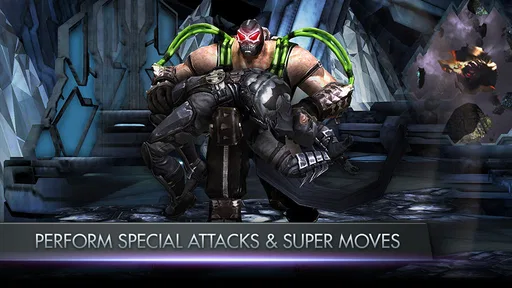
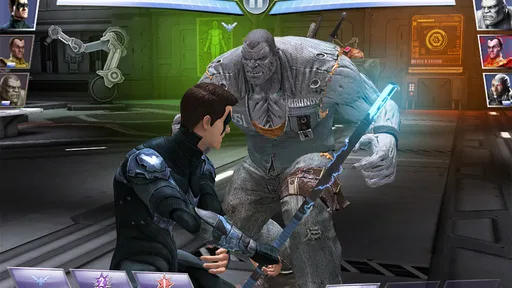
Combat itself is designed for touch screens. I can attack with taps and use swipes as part of the exchange, while special moves create moments where timing and attention matter more than repeatedly pressing one button. The controls are accessible enough for a short session, but they still leave room for learning when to defend, when to build toward a stronger move, and when to switch the focus of a battle through team choices.
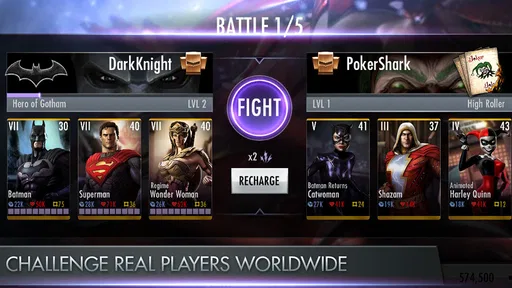
I especially like that the game makes team preparation relevant before the fight begins. If I send the strongest individual character into every encounter, I may still struggle when the overall group is poorly suited to the challenge. A more thoughtful lineup can be more valuable than blindly upgrading one favorite. That is one of the first non-obvious lessons I would give a new player: improve the team that solves your current problem, not just the character you like most.
A practical routine for short daily sessions
A realistic use case is a commute, a lunch break, or a few minutes at home while waiting for something else. I would start by checking which characters need progress, play a manageable battle to warm up, and then use the remaining time on a more demanding encounter. This prevents a short session from becoming frustrating because I began with the hardest available fight and immediately ran into a wall.
Another useful habit is to stop treating every loss as a reason to spend. When a battle goes badly, I first look at whether my team is underdeveloped, whether I am relying on one fighter too heavily, or whether my timing is making the fight harder than it needs to be. That pause protects the free-to-play value. It also turns failure into information instead of automatically turning it into a purchase decision.
I would also avoid using every resource as soon as it appears. Keeping some flexibility lets me respond to a difficult challenge rather than discovering that I have spent everything on a character who is entertaining but not useful for my immediate goal. This is a small management choice, but it has a noticeable effect on whether the game feels strategic or merely repetitive.
Where it sits beside other mobile fighting games
Compared with a traditional arcade fighter, this game is less about mastering a complete move list with one character and more about managing a group over time. If I want precise competitive duels, deep manual controls, and a clear match-to-match focus, a dedicated fighting game will probably suit me better. Injustice offers a broader progression loop, but that loop can make the action feel less pure.
Compared with other superhero collection games, its advantage is the direct connection between roster building and tactile battles. I am not only watching a team act or selecting commands from a menu; I am participating in the exchanges. The trade-off is that repeated encounters can become familiar, particularly for players who want constant mechanical novelty rather than gradual roster development.
It also differs from a premium game because the free download removes the initial price barrier while the optional purchase range introduces a continuing spending decision. A paid alternative may offer a cleaner sense of ownership if I prefer to pay once and avoid a progression model that can tempt additional purchases. Injustice is better for sampling and casual access; a premium title may be better for a fixed, self-contained experience.
What makes the roster more than decoration
The DC theme is not just a visual wrapper. It gives the collection system its emotional pull, especially when I can build a group around characters I already recognize. Still, familiarity alone does not make every character equally useful in every situation. The practical value of a fighter depends on how that character contributes to the team I am currently developing, so I try not to confuse personal preference with battle efficiency.
This creates a worthwhile trade-off. Chasing only the most exciting names can leave the rest of the roster underused, while focusing only on efficiency can remove some of the fun of collecting. I get the best experience when I maintain one team for reliable progress and experiment with another team simply because the combination is interesting. That approach keeps the game from becoming a narrow optimization exercise.
Where the friction becomes noticeable
The biggest limitation is the possibility of a slow-feeling progression loop. A free game can be generous enough for casual play while still asking for repeated effort when I want to advance quickly. If I have only a short amount of time and want immediate access to stronger characters or later challenges, the game may test my patience. This is not a flaw unique to this title, but it is important when judging whether the free option offers enough value for my habits.
The touch controls are convenient, yet they cannot provide the same precision or physical satisfaction as a controller. I enjoy them for quick battles, but I would not choose this version as my main fighting game if my priority were competitive execution. The mobile format is doing something different: it makes the characters easy to use in brief sessions, even if it sacrifices some depth and control accuracy.
There is also a psychological trade-off in the optional purchases. The lowest purchase point may seem easy to justify, while the upper end of the range is a much more serious commitment. I would keep purchase authentication active and decide in advance whether I am willing to spend at all. That is especially important for younger players, since the Teen rating does not remove the need for household spending rules.
Another limitation is that the game is not ideal for someone who dislikes collecting. The roster is central to the experience, and the battles make more sense when I care about developing several characters rather than finishing with one preferred fighter. If the collection layer feels like a chore, the action alone may not be enough to carry the experience for very long.
Who will get the most value
I think the best audience is a DC fan who enjoys short action sessions and likes making gradual decisions about a team. The game is also a good fit for someone who wants to try a superhero battler without paying upfront. Because the entry cost is free, it works well as a low-risk experiment for players who are unsure whether they enjoy mobile fighting games.
It suits me particularly well when I want something more involved than a quick reflex game but less demanding than a long console session. I can think about team composition, play a handful of battles, and leave without needing to complete a large uninterrupted campaign. That balance makes it convenient for irregular play, provided I accept that progress may feel slower than in a paid game.
I would recommend it less strongly to a player who wants a strictly skill-based competitive fighter, a single-character journey, or a premium experience without optional purchases. Those players may be happier with a game built around tournament matches, a traditional story mode, or a one-time payment. Injustice is not trying to be all of those things at once, and judging it by those standards would make its collection-focused design seem weaker than it is.
It is also not my first choice for very young children. The content rating is Teen, and the purchase range makes it sensible for parents or guardians to set clear expectations before handing over a device. Older players who understand the difference between free access and optional spending can make a more informed decision about whether the game deserves their time.
What new players should know before committing
If you are wondering whether you need to pay to start, you do not: the game is free to access. The more useful question is whether you are comfortable with a progression experience that may reward patience and may also present optional purchases. I would play long enough to understand the regular battle rhythm before spending anything, because early excitement about the DC roster does not necessarily predict whether the longer collection loop will hold my attention.
If you are asking whether it works well on an older device, the stated minimum is Android 6.0. That tells me the game is available to a broad range of Android users, but compatibility alone does not guarantee identical comfort on every phone. Screen size and touch responsiveness can affect how pleasant quick swipes and taps feel, so I would judge the controls on my own device during the free portion rather than assuming the experience will be perfect.
If you are deciding whether purchases are required for enjoyment, my answer is no for casual testing and ordinary short sessions. They become more relevant only if I want to accelerate progress or pursue the collection more aggressively. I would never buy simply because a difficult battle made me impatient. First I would adjust the team, revisit the controls, and decide whether the challenge is asking for better planning rather than more spending.
If you are concerned about choosing the wrong characters, I would avoid building the entire roster around one favorite. Keep a dependable group for progress, then use spare opportunities to experiment. This protects the practical side of the collection while preserving the personal side that makes a DC game enjoyable. The strongest roster on paper is not automatically the most satisfying one to play.
My verdict on value
After weighing the free entry point against the optional purchase range, I see Injustice: Gods Among Us as a worthwhile download for the right kind of player. It delivers a recognizable superhero setting, accessible touch combat, and enough roster management to give short sessions a sense of purpose. The free format lets me test those strengths without paying first, which is the clearest reason to give it a try.
My caution is equally clear: the game asks for patience if I want to progress without spending, and it will not replace a controller-based fighter for precision or competitive depth. The best value comes from treating it as a casual collection-and-battle game, setting a spending boundary, and using team planning instead of chasing instant upgrades.
I would download it if you want DC characters, brief action sessions, and a roster you can gradually shape. I would skip it if you want a paid-once fighting game, dislike repeated progression, or feel uncomfortable with optional purchases that reach from small amounts to a much larger single-item cost. For everyone in between, the free access makes the decision easy: try the battles, see whether the collection loop feels rewarding, and only then decide whether it deserves more of your time or money.
With a 4.3 average from about 2.5 million ratings and around 227 thousand written reviews, the game clearly has broad appeal, but its fit still depends on expectations. Warner Bros. International Enterprises has built a mobile action experience that is approachable rather than purely competitive. I recommend it as a patient, free-first way to spend time with DC heroes and villains—not as a substitute for every other type of fighting game.
Verdict
Strengths of Injustice: Gods Among Us
- Large roster of iconic DC heroes and villains
- Easy-to-learn combat with satisfying special moves
- Frequent events and challenges provide extra goals
- Strong visual presentation with detailed character models
- Works well for short sessions on mobile devices
Limitations of Injustice: Gods Among Us
- Energy limits can interrupt longer play sessions
- Progression becomes heavily grind-focused at higher levels
- Some powerful characters require significant time or spending
- Online features depend on a stable internet connection
- Repeated battles may feel monotonous after extended play
Other Releases by Warner Bros. International Enterprises
View All
LEGO® Star Wars™: TFA
Adventure3.5

Injustice 2
Action4.3

Heads Up!
Word4.5

Game of Thrones: Conquest ™
Strategy4.3
Similar Picks in This Category
View All
Temple Run 2: Endless Escape
Imangi Studios4.1

PUBG MOBILE
Level Infinite4.3

Free Fire: 9th Anniversary
GARENA INTERNATIONAL I4.4

Talking Tom: Hero Dash Run
Outfit7 Limited4.3

slither.io
Lowtech Studios3.9

Sniper 3D:Gun Shooting Games
Wildlife Studios4.6
Frequently Asked Questions
What is Injustice: Gods Among Us about?
Injustice: Gods Among Us is a fighting and collectible-card game featuring characters from the DC universe. You build a team of heroes and villains, then use them in one-on-one battles with special attacks, support abilities, and powerful super moves. The game includes a story campaign, challenge events, online-style multiplayer modes, and a large roster featuring characters such as Batman, Superman, Wonder Woman, The Flash, and many others.
Is Injustice: Gods Among Us free to download and play?
Yes, Injustice: Gods Among Us is generally available as a free download on supported Android and iOS devices. However, it uses optional in-app purchases for items such as power credits, character packs, energy, and other resources. Progress is possible without spending money, but unlocking and upgrading a large roster can take considerable time. Parents should also review the purchase settings before allowing children to play.
Can I play Injustice: Gods Among Us offline?
Some parts of Injustice: Gods Among Us can be played without a continuous internet connection, particularly certain solo battles after the necessary game data has been installed. Nevertheless, an internet connection may be required for updates, account synchronization, advertisements, special events, and selected multiplayer or online features. Availability can vary by device and game version, so the best experience usually requires reliable internet access.
Does Injustice: Gods Among Us support multiplayer?
The game includes competitive features that allow you to test your team against other players or player-created teams, depending on the current version and available services. Battles focus on assembling a balanced squad, choosing effective character classes, and timing attacks correctly. It is not a traditional real-time console-style fighting game, since much of the mobile combat is based on touch controls, team management, and progression.
What devices are required to run Injustice: Gods Among Us?
Injustice: Gods Among Us is designed for modern Android and iOS smartphones and tablets, but its exact compatibility depends on the operating system version, available storage, and device hardware. The game contains detailed character models, animations, and large downloadable files, so older devices may experience slower performance or installation problems. Check the current Google Play Store or App Store listing before downloading.
Play our best games!


